Sunday, 9 February 2014

9th February 2014 Littlehampton

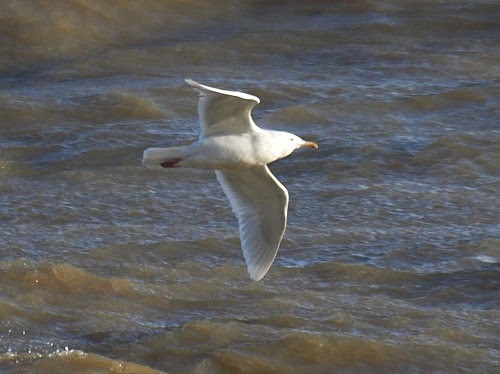
Glaucous Gull 1 adult summer
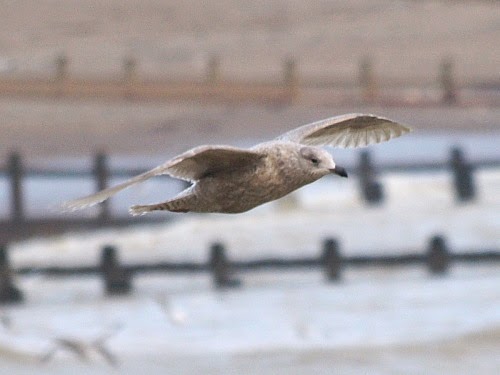
Kumlien's Gull 1 juvenile/first-winter

 
Juvenile/First-winter Kumlien's Gull at Littlehampton
 

Juvenile/First-winter Kumlien's Gull at Littlehampton (Paul Snellgrove)
Paul very kindly forwarded a couple of his flight shots to add to the blog that reveal great feather detail. for more of Paul's images please see http://www.flickr.com/photos/21191338@N07/with/11258847394/


Juvenile/First-winter Kumlien's Gull at Littlehampton


Adult summer Glaucous Gull at Littlehampton
 
Adult summer Glaucous Gull at Littlehampton

Saturday, 8 February 2014

8th February 2014 Littlehampton

Mediterranean Gull 1 adult winter
Little Gull 2 (1 first-winter)
Glaucous Gull 1 adult
Kumlien's Gull 1 juvenile/first-winter dark individual


Adult Glaucous Gull at Littlehampton


First-winter Little Gull at Littlehampton

First-winter Black-headed & Little Gull at Littlehampton


Adult winter Mediterranean Gull at Littlehampton

Juvenile/First-winter Kumlien's Gull at Littlehampton
When seen at distance and in strong sunlight as it fed amongst a flock of Black-headed Gulls its overall colouration was very creamy so reminiscent of a juvenile glaucoides

It often foot-paddled dropping its pink legs
 
It appeared of quite delicate proportions whilst flying amongst the Black-headed Gulls again reminiscent of glaucoides
 
Its darker outer webs to the upper sides of its outer five primaries were readily apparent as the bird approached us


Its head, neck, beast and belly appeared considerably coarser marked darker greyish than we associate with glaucoides 

Appearing full-bodied and not so sleek as glaucoides

Bill appearing black and slender nicely set-off by its narrow white nose-band

On the water it showed superb complete dark grey-brown centres to its primaries with contrasting narrow pale fringes around the entire tips so a close match to the pattern described for a dark individual

In more overcast conditions it definitely took on an overall more colder brown-grey appearance than glaucoides as described by Van Duivendijk

As described in Van Duivendijk and Olsen its primary projection didn't strike us as long as in glaucoides.

Its tertials appeared grey-brown centred with some pale notching along their fringes with broad whitish tips. A near-identical tertial pattern is shared with an overall very similar dark individual photographed in Ireland here: http://www.theinkednaturalist.co.uk/2012-what-a-year/

 
As described in Van Duivendijk its bill appeared slightly heavier than glaucoides. At ant range it appeared all dark but close views showed it mirroring glaucoides in having a very slightly paler grey basal two-thirds
 
In more deliberate flight it then appeared far more stout, hefty, powerful and broad-winged than our impressions of glaucoides. Whilst overall darker too it only shows the merest hint of a diffuse dark trailing edge to its outer primaries and therefore much weaker than that of a Thayer's Gull. Furthermore there is only a vague impression of a very slightly darker secondary bar.
 
 
Juvenile/First-winter Kumlien's Gull at Littlehampton
The pattern of its outer wing with its pale inner primaries and darker outer primaries are portrayed being the reverse of glaucoides. Also its dark primary coverts are shown to good effect. In many ways its 'least pleasing' attribute was its tail pattern. Whilst basally often appearing quite dark the broad pale tips to its tail feathers created a broad pale terminal band captured much better by JFC here:
 
Juvenile/First-winter Kumlien's Gull at Littlehampton (JFC)

Monday, 3 February 2014

Siberian Chiffchaff, Forest Wagtail & Gyr from Japan


Siberian Chiffchaff at Shimonoseki, Yamaguchi, Japan (Aki Sakuma)
For those that have followed the evolving identification criteria of tristis Chiffchaffs over the last few years here's the appearance of one 'at the other end of the Palearctic' currently wintering in Japan and also a link to one we found on Hegura-jima, Japan in October 2010:
With their  buff supercilia lacking yellow, hint of dark lateral crown-stripes, brownish ear-coverts, grey-brown upperparts, dark alula, faint pale greater covert wingbar, greenish fringes to their secondaries and tail feathers, dark centred tertials, pale underparts lacking yellow, pale yellow marginal underwing coverts and black legs and feet they conform rather nicely to expectations. In addition, the Hegura bird continually called the rather quiet thin monosyllabic 'lost chick' call. Whilst it is still considered a vagrant to Japan (we met the finder, Toshikazu Onishi, of the 'first for Japan' whilst on Hegura) it would seem highly-likely they originate from considerably further east than the Urals. Certainly Brazil (2009) considers tristis to be the only taxon of the group likely to occur - he actually considers tristis a monotypic species...


Chinese Grey Shrike at Hofu, Yamaguchi, Japan (Aki Sakuma)
 
Chinese Penduline Tit at Kirara-hama, Yamaguchi, Japan (Aki Sakuma)

Saunder's Gull at Kirara-hama, Yamaguchi, Japan (Aki Sakuma)

Amur Wagtail M. leucopsis at Kirara-hama, Yamaguchi, Japan (Aki Sakuma)
 
Forest Wagtail at Mi-ike, Kyushu, Japan (Aki Sakuma)
Another weekend and another successful twitch for Aki this time way south to Kyushu for a wintering Forest Wagtail performing at Mi-ike. Sharing a distribution near-identical to Amur Wagtail (that spectacularly made the UK in April 2005), and like Amur Wagtail in having previously strayed to both Australia and the Western Palearctic, surely on the cards for northwest Europe sometime soon... planning on twitching Chinese Grey Shrike and Siberian Chiffchaff to the far southwest this coming weekend Aki still has a Savannah Sparrow and Japan's fourth drake American White-winged Scoter to catch-up with nearer to Tokyo. A very busy Winter to be twitching in Japan!
 
Richard's Pipit at Izumi (Aki Sakuma)
An annual scarce migrant in Japan typically found on offshore islands

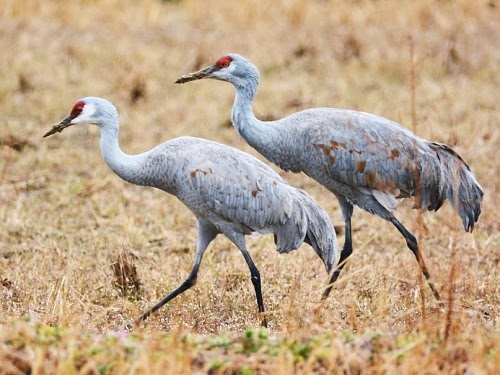
Sandhill Cranes at Izumi (Aki Sakuma)
Still considered a rare winterer numbers are increasing in Japan and are now a regular feature at Arasaki

Ruddy Shelduck at Izumi (Aki Sakuma)
Another rare winterer in Japan and safe to assume this one doesn't originate from the feral European population!
 
 
Juvenile 'brown' Gyr near Hakodate, Hokkaido (Aki Sakuma)
Last weekend Aki successfully twitched this juvenile Gyr from Tokyo and obtained these superb images. Being a brown morph it is of all the more interest from a European perspective but is the typical morph of Gyr Falcons that hatch in northeast Russia being the likely origin of this individual.

Saturday, 1 February 2014

1st February 2014 Birling SW6 Overcast 8am - 8.45am & Princes Park

Red-throated Diver 13E
Great Crested Grebe 2E
Auk sp. 16E, 3W
Rock Pipit 1

Princes Park
Slavonian Grebe 1 w/p


Slavonian Grebe at Princes Park